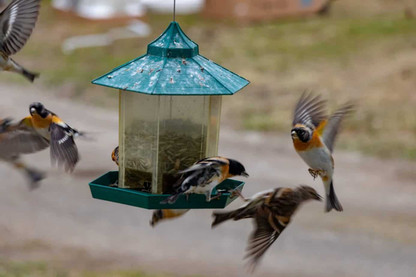
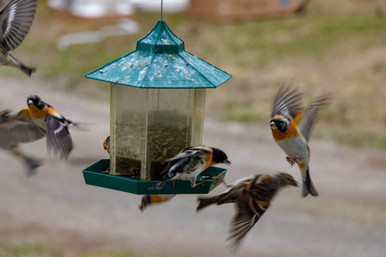
When you think about ‘bully birds’ there are probably a few common culprits that come to mind. We’re talking starlings, magpies and jackdaws. These birds will often swoop in and scare off other birds that might be feeding. Collared doves aren’t necessarily ‘feeder bully birds’ but they do like to take a lot of food from our feeders, so it’s understandable you might want to deter them, too!
Whether you’re trying to keep the pigeons out of your garden or you want to stop the starlings from being persistent pests, there are some simple ways (that are completely bird-friendly) that will help you discourage any bird bullying goings-on in your garden.
Shorten the perches on your feeder
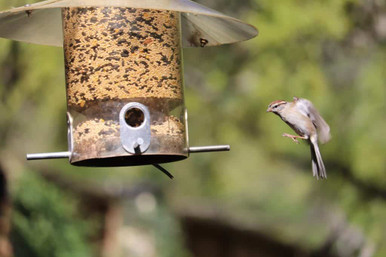
Some bird feeders have longer perches than others, meaning even large garden birds can perch on them and feed. If possible, try shortening the perches on your feeder to deter any larger birds - but make sure you leave enough room for the smaller birds to sit on!Consider a caged or weight-activated bird feeder
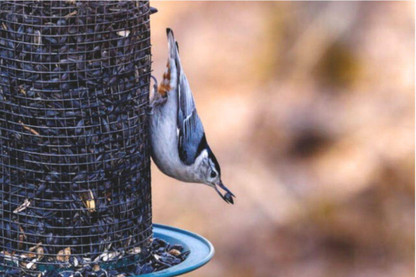
To stop bully birds you might want to consider a bird feeder for small birds only. Weight-activated bird feeders are a great way to ensure the smaller birds get a look in, as are caged bird feeders for small birds. Weight-activated bird feeders will close when a bird that’s too heavy (such as a collared dove) sits on the perch, whereas feeders with cages on the outside prevent larger birds and even squirrels from getting near the food - yes, they’re squirrel-proof too! Caged feeders are perfect if you’re looking to provide food for the likes of robins and blue tits.Keep it clean and avoid ground feeding
It’s always important to maintain your bird feeding accessories to avoid any mess. There are some birds, such as wood pigeons, that are notorious for feeding off fallen scraps on the ground. You’ve most likely witnessed street pigeons wandering about your town, feeding on dropped food - and wood pigeons are no different. Although they are considered less of a pest than their urban-relatives, wood pigeons do love to feed off fallen bird feeder scraps. Whether you’ve invested in a weight-activated feeder or not, preventing any seeds or suet from falling on the ground will keep away any unwanted ground feeding birds. Simply adding a seed catcher beneath your feeder will help to deter any pests!
Be selective about the bird food you choose
Depending on the birds you’re looking to attract to your feeders, you can be selective about the types of bird food you choose. For example, bully birds tend to stay away from seeds in our plain bird seed collection, such as nyjer seed, but smaller birds aren’t as picky and tend to love the likes of nyjer seed. Now that you’ve got some tried and tested methods to try out in your garden, you’ll be able to enjoy as your feathered friends flock to your bird feeder. Don’t forget to log any sightings on our Birdspotter map for others to see! If you’re not sure what birds are visiting your feeder, our A-Z bird guides might help you identify them.12th Jun 2019