Common Bird songs in your Garden
If your garden has become a soundboard for local birds, then you’ve probably wondered which exact birds are making which exact noises. How do you separate one chirp from the other?! Refer to our blog ‘Common bird songs you might hear in the garden’ so can finally put a bird to the sound when the singing wakes you up in the morning…1. Robin (Erithacus rubecula)

What does the song sound like?
The robin redbreast’s song is most often described as a cheery whistle. The song is delivered at a steady, consistent rhythm with rising syllables. To many, the robin’s song considered a quintessential sound of Spring. Click here to listen to the robin’s song.When can I hear it?
You’re likelier to hear the robin’s song around dawn, all-year round.2. Chiffchaff (Phylloscopus collybita)

What does the song sound like?
The song of the chiffchaff sounds mostly like its name, with the latter syllables rising around the ‘chaff’ part. Click here to listen to the chiffchaff’s song.When can I hear it?
The chiffchaff is a summer visitor to the UK and they rarely sing once autumn comes around.3. Blackbird (Turdus merula)

What does the song sound like?
The Blackbird’s song is best described as a shrill, rising squall. Some have even called the Blackbird call ‘conversational’ because of its friendly sound. There is a slight difference between the male call and the female call - males make a clear descending whistle that lasts about half a second long while the female song is more rapid and abrupt. Click here to listen to the Blackbird’s song.When can I hear it?
Blackbirds usually start singing from late January (if it’s good weather) to anywhere around late March.4. Wren (Troglodyte)
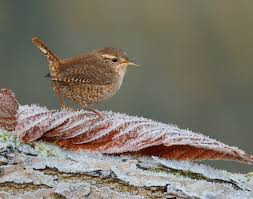
What does the song sound like?
The wren’s song is a bubbling mixture of churrs and warbles and it increases during breeding season (more often than not, the sound comes from females answering male calls!). The call is often made in response to a predator, too. Click here to listen to the wren’s song.When can I hear it?
The wren’s song can be heard throughout the year although in winter their numbers generally deplete, so it will likely be a rarer sound to hear in the colder months.5. Nightingale (Luscinia megarhynchos)

What does the song sound like?
Known for singing through the night, the nightingale’s song is like a soaring whistle - its crescendo is said to be one of the most beautiful bird sounds ever. They’ve been known to sing through the day as well as night, though they are primarily known as night time warblers. Click here to listen to the nightingale song.When can I hear it?
The best time that you’ll hear the nightingale sing is May to early June. Again, that’ll be at night mostly but if you’re lucky you may hear them in the day too.Why not try your hand at feeding wild birds?
Since the above birds may well be gracing your garden with their presence this year, why not try feeding them? We have plenty of bird food options on our site, including sunflower seeds for birds. You can even consult our Birdspotter tool to locate a bird of your choice. To talk about your bird feeding options, you can call us on 01778 342665 or email us on info@kennedywildbirdfood.co.uk.18th Apr 2019